
The Devil's Chord – Chapter 4
Diabolus in musica
The Devil’s Chord, or what Christian liturgical music used to call diabolus in musica, isn’t a chord at all, if we accept the common definition of a chord as at least three notes – a triad. On the contrary, the Devil’s Chord is a dyad, or interval: two notes, one exactly half an octave above the other. In other words, a tritone.
Which sounds from the name as if it ought to have three tones in it, like a tricycle has three wheels. The terminology of Western musical theory is neither logical nor transparent. How my Year Sevens struggled with this …
Never mind, never mind. That’s all water under the bridge, as Ken would say. The important thing, is: how does it feel?
The Devil’s Chord feels what music students learn to call ‘unresolved’ or ‘unstable’. Non-musicians might say ‘harsh’, ‘dissonant’, or ‘creepy’.
So it’s used all the time. In horror movie soundtracks, in heavy metal, in jazz and blues, and in modern classical music. Yes, even in bluegrass. The Devil’s Chord is not particularly devilish, or even avant-garde. It’s old hat, musically speaking.
But anyway, it made a good name for a band. Particularly a band which featured a young female fiddler and two shady male characters. We dressed the part on stage, and for our promo posters and singular video. Heels and fishnets, tight, red skirt and low-cut top for the fiddler; sinister trenchcoat, black, flat-brimmed Stetson and gravedigger boots for the lanky banjo player; muscle tee and black leather vest and pants for the energetic, strutting little mandolin player and lead singer, whose stage presence oozed sexual ambiguity.
Yes, we hammed it up shamelessly, and sold our youth and sexual allure more than our music.
We only slowly came to realise just how apt the name was, in our particular case. It was unclear whether there were two notes or three in this band, in this relationship, and there was plenty of unresolved tension lurking under the surface of our ‘easy-going’ ménage à trois.
It was all a bit tawdry, a bit flashy and a bit heartless. Like the music, to be honest. But bless our innocence: we thought ourselves so clever and original, so free of middle-class convention.
It was only after Toby left, that we began to realise how unhappy we’d been.
Ken had always been in his brilliant friend’s shadow, both musically and romantically. I’m afraid I used him shamelessly and cruelly: as a confidant and go-between when Toby was impossible and demanding, which was often; as a warm male body when Toby was distant, cold and sulky, which was not infrequent.
Thank God, Ken wasn’t one to bear a grudge. His equanimity would have been inhuman, if it weren’t for his kindness. I tend to think that caring for animals was his true vocation, and that musical stardom would have been wasted on him, or even poisoned his sweet, gentle soul. He would have withered in the limelight, in the same measure that Toby thrived on it.
Be that as it may: it’s all just historical speculation now. On St Valentine’s Day, 1991, we were bereft, as we stood in the airport departure lounge and waved goodbye to Toby Reid and our musical future.
Our tricycle had lost its third wheel, and had become a useless and unsteerable piece of junk.
Or so we thought at the time.
The town’s filling up fast. I have to queue for our bread and milk in the general store and post office. Frieda behind the counter looks slightly frantic already, wispy blonde hair plastered to her plump, perspiring cheek. It’s only Wednesday, girly. What’ll you be like by Monday morning?
Every bookable bed is booked, she tells me, every habitable dwelling Airbnbed. It doesn’t surprise me. Weekend passes for the Pick have nearly sold out online, so anyone hoping to rock up and buy one on the day may find themselves disappointed. Insurance for events like this has become extortionate, and we’ve had to close down one of the smaller venues, reducing the number of seats and hence, passes.
The enthusiasm of audiences for live music seems to have fully recovered from the COVID years; the enthusiasm of insurance companies for scalping festival organisers has redoubled.
On the way home, I stop by the cricket and footy oval. SCAP ops manager Maree is there, checking in with Bradley, the groundskeeper. He’s about to give the grass a final haircut. He’s feeling nervous for his turf, he admits. Each year the ruts and bald patches left as the weekend’s aftermath grieve his loving heart.
I empathise. Tomorrow the oval will start to fill with tents, campervans, motorhomes, horse floats and panel vans – anything which might house a motley bunch of superannuated musical nomads and their instruments for a long weekend.
Campfires are forbidden on the precious pitch, and the volunteer wardens have been briefed on the level of shenanigans that’s acceptable.
We’ve resisted the push to get paid security guards in. We tried it once, but they were expensive and tended to be stiff, toey and not much use in this anarchic but good-humoured rabble of beards, beer bellies and hand-knitted sweaters, which to them must be as alien and baffling as an ecstasy-fuelled trance/techno rave would be to us ‘oldsters’.
Well, to most of us. There are probably some trance/bluegrass crossover afficionados.
The Pick is one of Silver Creek’s main revenue sources for the year. Just before COVID struck, it paid for the new toilets, changing rooms and showers at the oval. The year after that, when we had to cancel, was a bleak one for our community.
This year, we need all the revenue we can get. We’re not really on the tourist trail, in this side valley lacking a sealed, all-season through road. For the spring blossom, the car rallies, the long summer lunches and the autumn leaves, most people go to Bright, which along with Beechworth gets the cream of the conventions and fairs. Not that we begrudge them the congestion.
Visitor-wise, we mostly get small packs of hardy cyclists on a side quest from the Murray to Mountains Rail Trail, and sturdy-calved bushwalkers bent on slogging up our mountain. We’re not accessible enough to the snowfields to get any of the winter sports crowd.
There’s overflow camping down by the creek, for those who are self-sufficient with their own sanitary arrangements, in their motorhomes and camper trailers. We have to monitor the situation carefully to make sure the dirt tracks don’t get too boggy; it’s officially the remit of Parks Victoria, but they just don’t have the rangers. One year the creekside camps became waterlogged, and three of those lumbering Winnebago things got stuck, had to be pulled out by tractor.
I decide to take a look down there myself, rather than heading straight home.
Am I putting off the inevitable conversation with Ken, about how to deal with the looming Toby Reid Situation? Yes, it’s acquired a capital S in my mind.
We can’t just ignore him, when he arrives in town. I’m the official face of the Pick, God help us all.
What the Traditional Owners called our little creek isn’t known to me. I’ve made some enquiries, but not persistently enough, I’m ashamed to say. I do know that in the late nineteenth century it briefly had the inauspicious name Cyanide Creek, and that this was attached to the township as well.
It wasn’t just lousy PR. The cyanide really was here: used in vast quantities to process the tailings from the gold mining, which took place here from the eighteen-fifties onwards.
She would have been a pristine little mountain creek: full of turtles, galaxias and blackfish, her banks thick with silver wattle and she-oak.
Unfortunately, she also carried threads, skeins and knots of gold, washed down from the quartz seams at the head of the valley. That was her undoing, when the ragged prospectors came this way with their shovels, picks and pans, at the height of the first Victorian gold rush.
They’d come on over from the Spring Creek diggings, from Buckland and Morses Creek, from Bendigo and Ballarat and Woods Point. Before that, California. Before that, the world. Men, mostly, coming to the new colony of Victoria in search of wealth.
Within a year or two, the surface alluvial deposits were worked out. Then came the deep leads, the false bottoms: where the stream bed had meandered over the millennia, there were deeper, older deposits far away from the present watercourse, hidden under metres of silt and boulders swept down in the snowmelt floods and summer storms. These caches of gold were dug, blasted and sluiced out, harnessing the power of the water itself to destroy the valley sides, wash the silt and crushed rock downstream in a thick slurry, leaving the heavy yellow metal behind.
Then the Cornishmen came, stocky dark-haired miners and engineers, used to working at depth. They ignored the near-spent alluvial deposits the Chinese were still diligently picking over, and headed up-valley for the mother lode: the deep quartz reef under the mountain. They dug shafts, adits and galleries, hunting the seams of gold-bearing ore. Their batteries of steam-driven hammers pounded night and day, smashing the guts of the mountain to gruel. To extract the gold from the ore, they used sodium cyanide. The horribly toxic waste was stored in large tailings dams below the mining operation.
After the Cornish miners had moved on, the valley began to recover, the little creek began to come back to life.
Then, at the beginning of the last century, eyes turned again to the tailings and to the supposedly worked-out alluvial deposits. Modern mechanical dredges with their great steel buckets could chew through in an hour paydirt that a crew of Chinese miners would take a month to dig by hand. The concentration of gold was far lower, but the quantity of dirt that could be processed with modern machinery and chemistry made the work viable.
And so they rearranged the land. They scooped out the entire damned valley, turned it into an industrial hellscape. Not one feature along Silver Creek is actually natural. The peaceful, grassy river flats, the flood meadows, the orchards and gardens and quiet, leafy streets. All of it mining waste.
You’d need a sharp and knowledgeable eye to spot that, though. The tell-tale signs of a town built on gold are the abundance of non-native trees in the park-like landscape, and the fine Victorian-era buildings along our steep high street, with their beautiful brickwork and ornate chimneys.
It may seem preposterous that our tiny mountain outpost boasts even a post office, let alone two former banks, three former hotels, a bakery and a Mechanics’ Institute and public library – all for a permanent population of five hundred souls. For a brief decade of its history, though, the population of Silver Creek climbed above twenty thousand. It was considered one of the richest small towns in Australia.
The architectural legacy has been kept in good order. It now provides a variety of interesting and picturesque venues for the Silver Creek Alpine Pick.
The campsites down by the creek are quiet, green and shady. I turn a bend and find three teenage boys fishing. Wagging school. I recognise them immediately: they’re among my former pupils, down at Myrtleford P-12.
‘It’s a curriculum day, Mrs Newell.’
‘Of course it is, Noah Smith. Do your parents know that? Does Mrs Moresi?’
Linda Moresi is the school principal, and not a force to be trifled with.
‘You won’t dob us in, will you?’
I smile into the anxious fourteen-year-old face.
‘I’m retired, Noah. You’re officially Someone Else’s Problem now.’
The boys don’t seem to know what to make of this. That teachers have a whole other life outside school, and don’t actually give two shits what their former charges get up to, within reason, is a revelation to some kids.
‘Tight lines, boys!’ I call over my shoulder as I walk back up the trail. ‘Don’t drown, okay?’
The creek looks innocuous, but it can be treacherous in places, with undercut banks, slippery rocks and strong currents.
‘Thanks, Mrs Newell! No, Mrs Newell! See ya.’
Next Tuesday in The Devil’s Chord: Meg recalls a troubling, unexplained incident that happened during a drunken night with the boys.
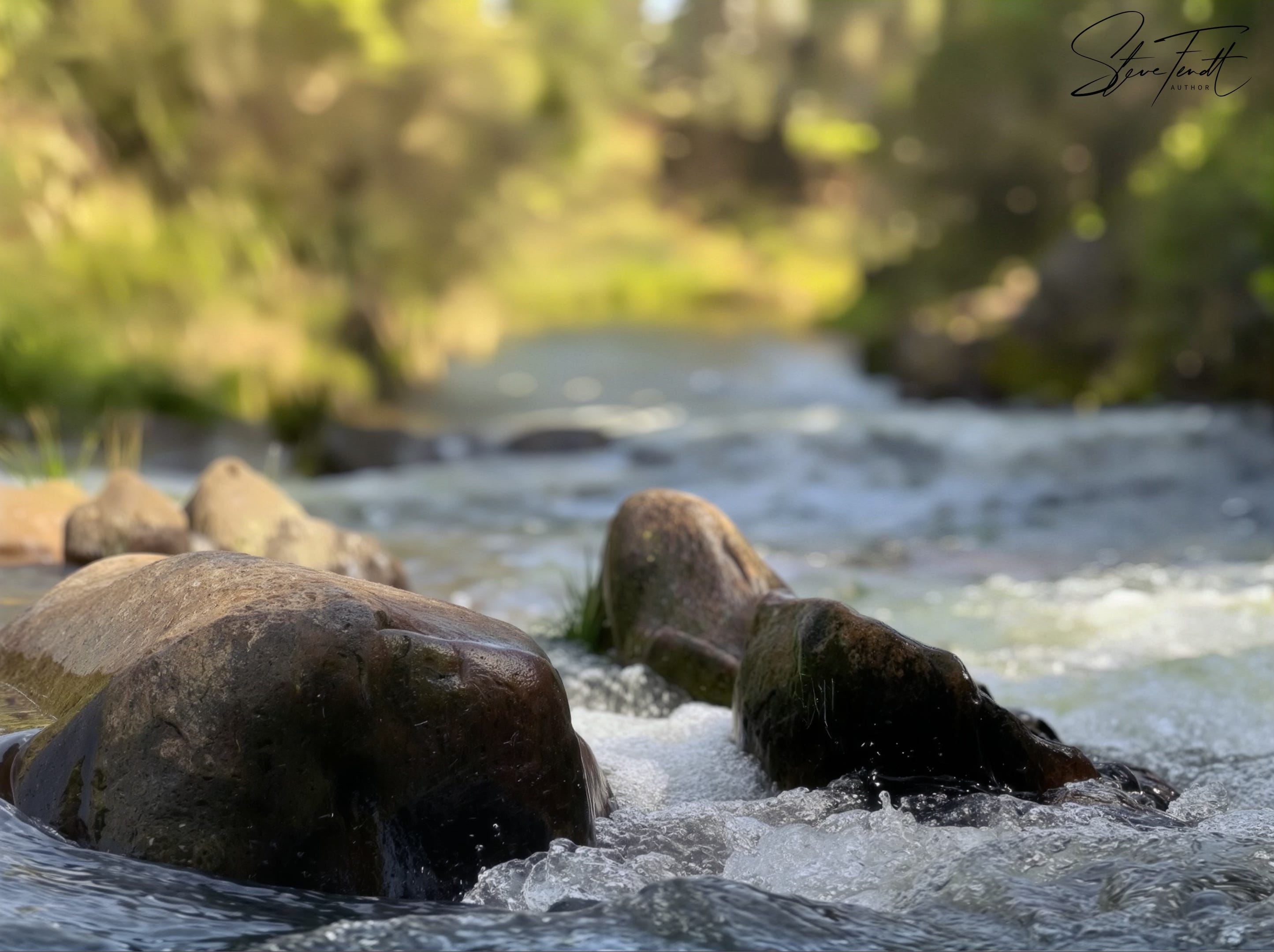
Title image: ‘Down by the Creek’ is a photo taken by the author, modified using Gemini 3.
I hope those boys won't wagging my husband's class 😅
Nice chapter, Steve. I particularly liked the description of the Devil's Cord. I didn't know that's what it referred to.
Steve, I find the concept of “Diabolus in Musica” very intriguing. 😈😈
Waiting for the next chapter. 💛